
Where Water Flows, Equality Grows

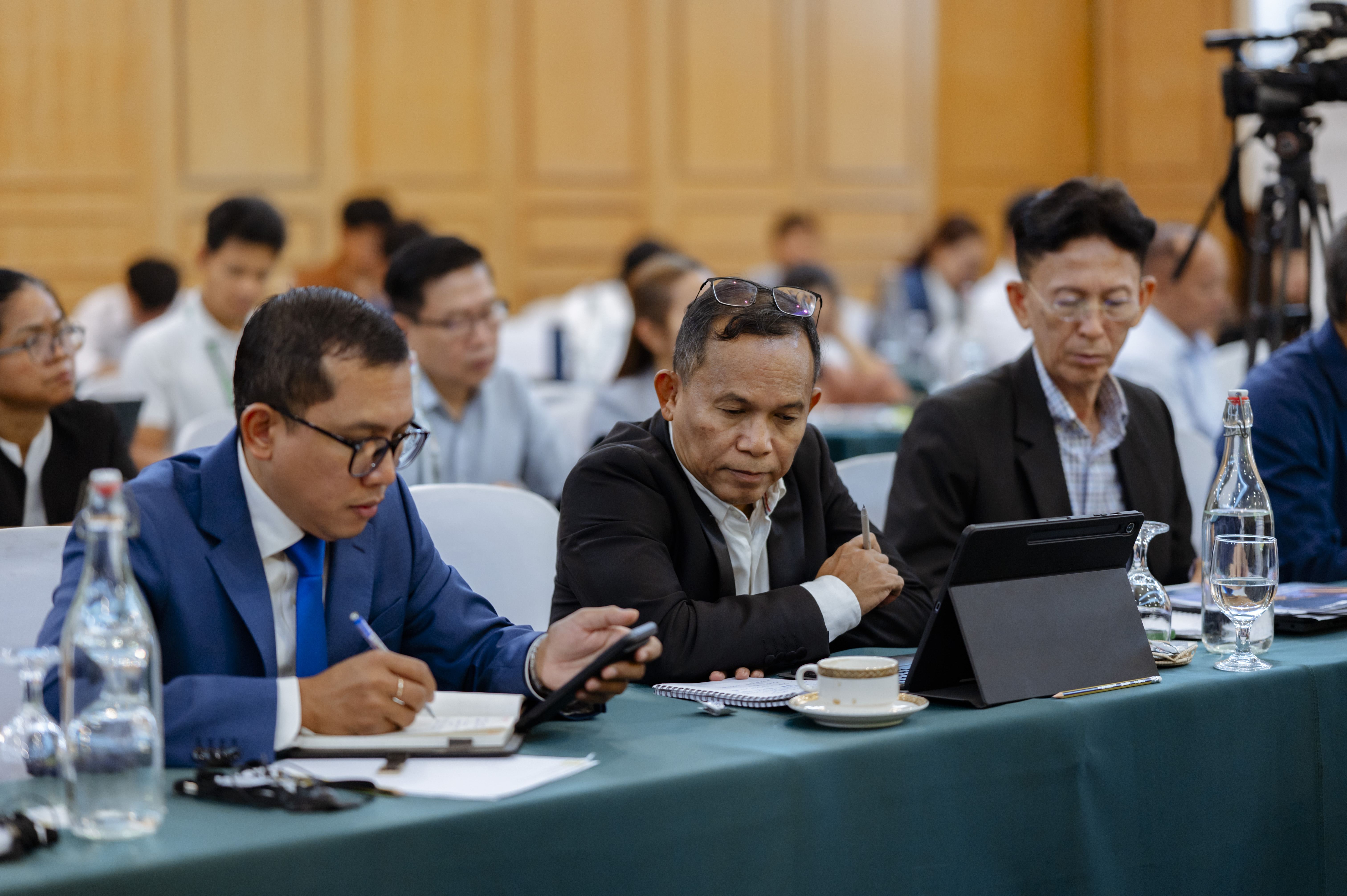
Panel discussion on "How can some of the key WWDR findings and suggestions be used in Cambodia’s water sector development and climate resilience initiative." Photo: Oxfam
In Cambodia, water is both a lifeline and a challenge. Despite abundant rivers and lakes, many communities face seasonal water scarcity that threatens livelihoods, food security, and health. Women, who are often responsible for securing water for their families, remain underrepresented in decision-making bodies such as Farmer Water User Communities and River Basin Committees. This lack of representation means their voices and experiences are not fully reflected in policies that shape access to water.
On 30 March 2026, UNESCO and Oxfam launched the United Nations World Water Development Report 2026 in Phnom Penh, under the theme, Water for All People: Equal Rights and Opportunities. The event brought together more than 70 participants from government, UN agencies, civil society, youth, and media. Together, they explored how inclusive water governance can transform communities and strengthen Cambodia’s resilience to climate change.
According to Sustainable Development Goal (SDG) 6 data, only 33% of Cambodia’s population had access to safely managed water services in 2024. While the country is rich in water resources, including the Mekong River and Tonle Sap Lake, many areas suffer severe shortages during dry seasons. These challenges disproportionately affect women and girls, who bear the brunt of water insecurity yet remain excluded from leadership roles in water governance.
The launch discussions identified specific actions to close gender gaps in water governance and financing, aligning with Cambodia’s Climate Resilient Water Resource Governance Roadmap.
H.E. Ms. Ngin Lina, Secretary of State and Chair of the Gender Working Group of the Ministry of Environment, said, “Water security for all is a key policy priority of the government and it has been mobilizing cross-sectoral collaboration and partnerships for more inclusive water governance practices. More enabling environments are being supported that improve women’s leadership and engagement in water governance decisions, including those related to access to affordable finance for women’s entrepreneurship.”
Ms. Sophoan Phean, National Director of Oxfam in Cambodia, said, “Oxfam and partners have co-designed many innovative approaches that further strengthen gender inclusive natural resources governance practices and policies in Cambodia. Our approach has always been to bring about systemic changes by working on some of the underlying causes of inequality and marginalization and building capacity for long-term impact.”
Mr. Flavio Bonetti, UNESCO Representative to Cambodia, said,“UNESCO is committed to strengthening the links between water governance, gender equality, and sustainable development. In the Lower Mekong Basin, we are addressing data and capacity gaps in transboundary groundwater management while promoting women’s equal participation through Gender Focal Points and Groundwater Gender Action Plans.”
The report emphasizes that gender equality in water governance is not just about fairness, it is about building stronger, more resilient societies. When women are empowered to lead, communities benefit from diverse perspectives, more equitable resource distribution, and innovative solutions to water challenges.
This launch was co-convened by Oxfam, as part of the Government of Australia and the Swiss Agency for Development and Cooperation (SDC)-funded Mekong Inclusive Water Governance and Climate Resilience Project (IP3), together with the UNESCO Cambodia Office.
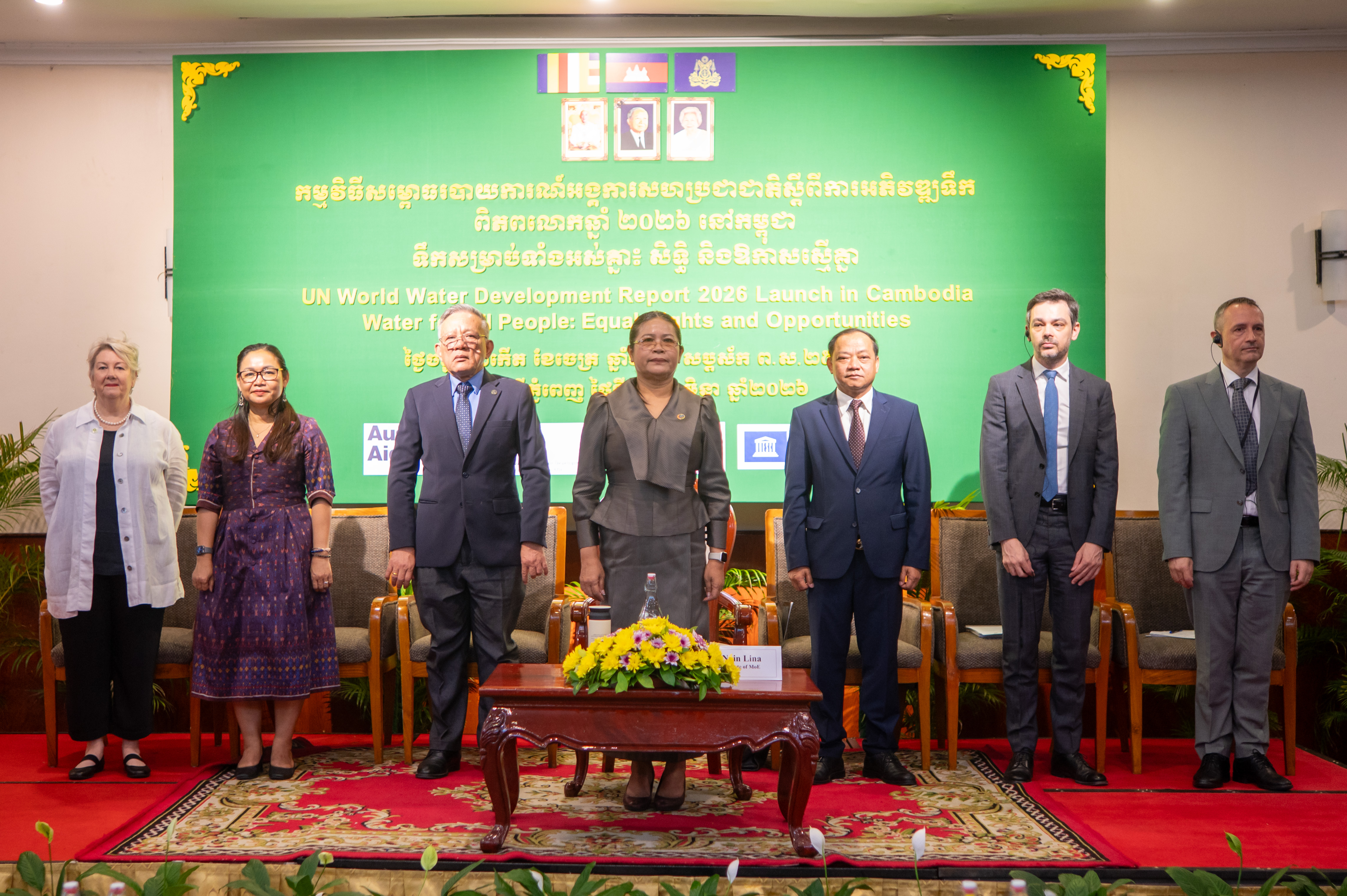
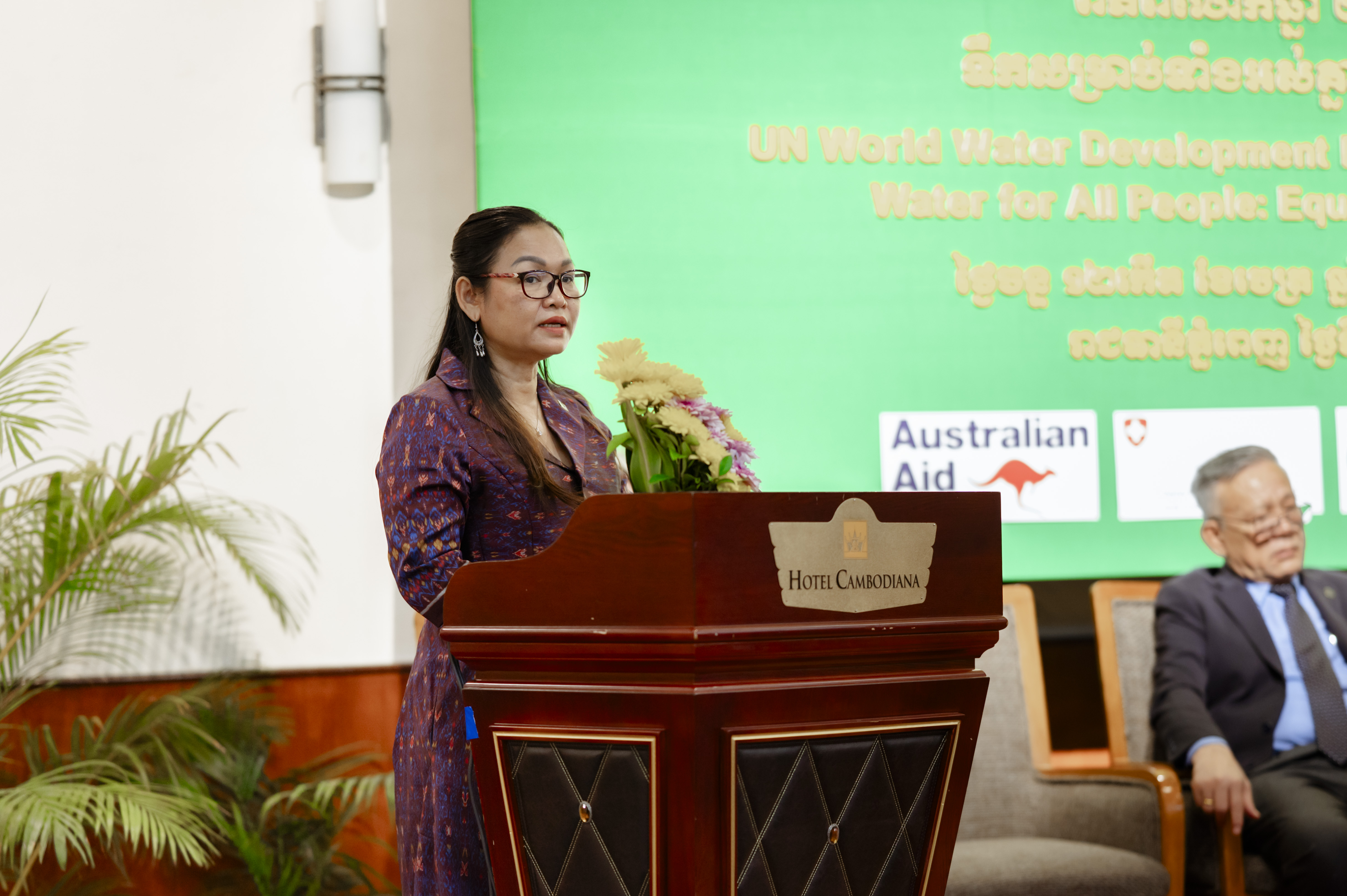
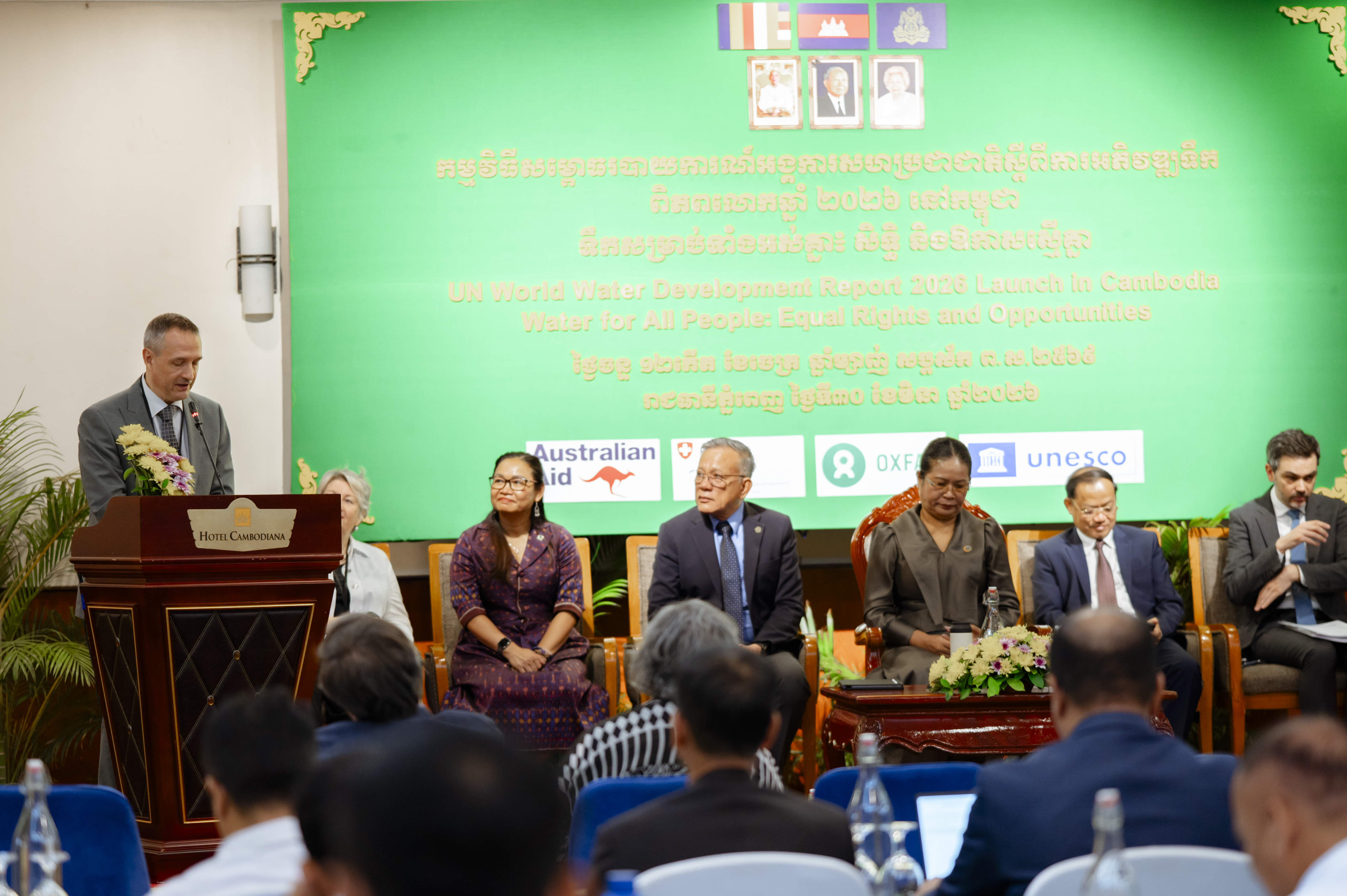
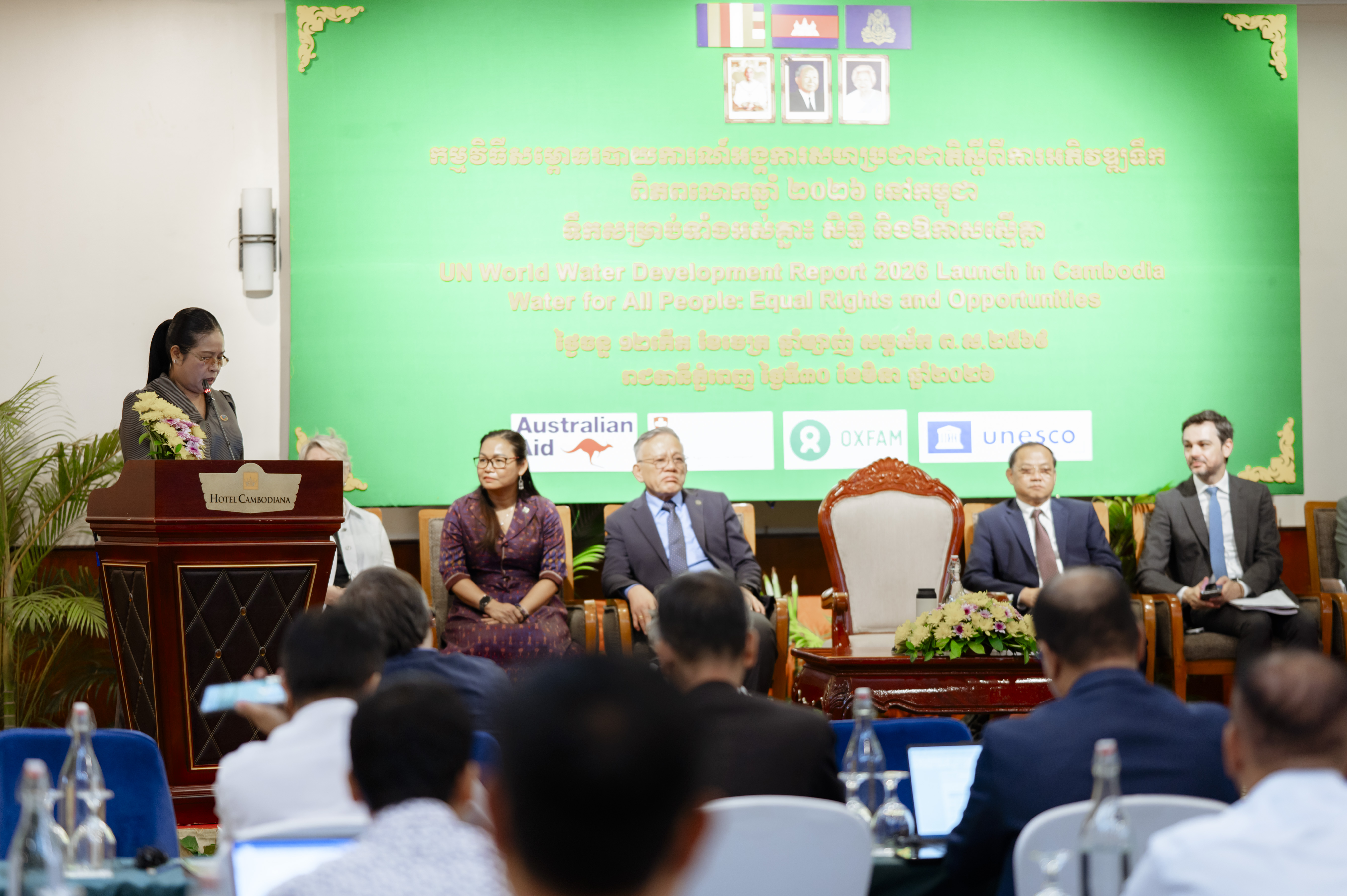
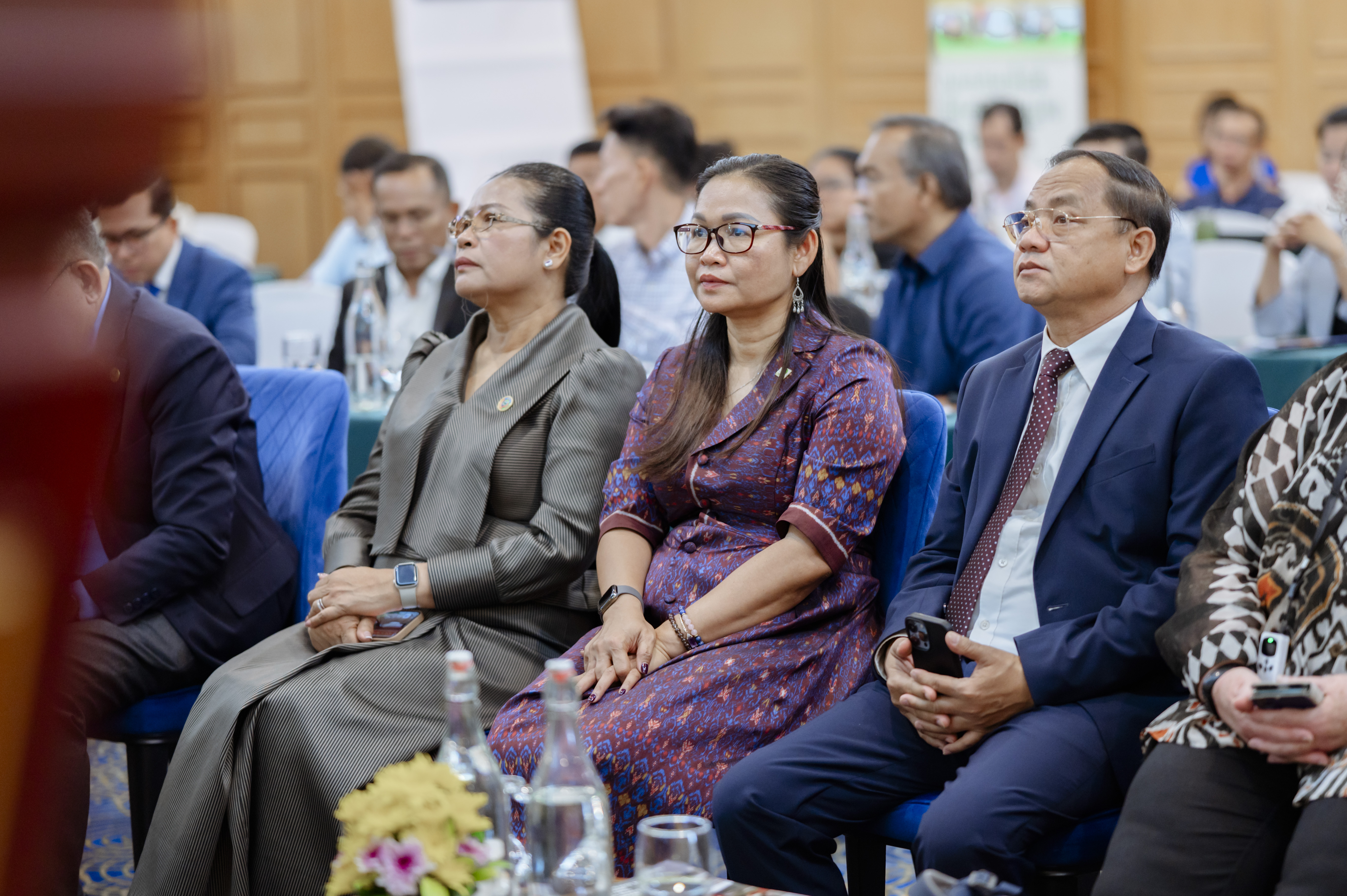

Group photo with participants and honorable guests during the launching of United Nations World Water Development Report 2026 in Phnom Penh. Photo: Oxfam